

21Views 0Comments

Ekiben: Your Guide to Bullet-Train Bento
Free
Makunouchi ekiben

For a little bit of everything and a whole ‘lotta rice, try one of the first types of ekiben ever sold: the makunouchi bentō. This is one of the most widespread types of ekiben (and bentō) in Japan.
Makunouchi bentō originally got their name because they were sold during intermissions of Noh and Kabuki performances in the Edo period.
This type of bentō traditionally consists of white rice shaped into mounds and topped with sesame seeds and umeboshi, plus side dishes such as pickles, some fish, and a bit of meat. This is great if you are looking for a more balanced meal.
Character ekiben

Character bentō are great for taking pictures — we should know; take a look at our viral Instagram reel. From cute Kirby bentō to butt detectives, you’ll find something amusing. They can be hard to find, or often sold out in some places, so make sure to arrive early. We personally enjoy the daruma-inspired bentō from Takasaki in Gunma.
Sometimes the food can be shaped creatively, but generally, the inside isn’t as exciting as the packaging, and that’s probably because they are made for a certain clientele, which brings us on to our next type of bentō …
Children’s ekiben

You may want a children’s bentō all for yourself, and nothing is stopping you; there are no ekiben police to snatch it from your hands. But you need to know that the Shinkansen-shaped bentō will not be bigger on the inside.
You can expect portions to be small with tiny Wiener sausages, an egg, a handful of rice, and maybe a teeny hamburger patty or fried shrimp. And they aren’t cheap (around ¥1,300), so it’s a pretty expensive snack.
Vegetarian ekiben
The lack of vegetarian options in Japan comes as a shock to many, and unfortunately, the issue also spreads to ekiben. While searching Tokyo Station for meat-free ekiben, we were pointed toward the seafood section. Ekibenya Matsuri used to have a vegetarian bentō a few years ago, but have since discontinued it and now have zero options.
There are some alternatives — such as a salad, inari sushi (the ones that don’t use fish dashi stock), takeout at the veggie restaurants nearby (see T’s Tantan), sandwiches, or just defaulting to the convenience store again.
When hunting, make sure to check the side of the ekiben or ask the staff.
We have more advice on being a vegetarian and vegan in Tokyo in our handy guide.
Self-heating ekiben

The one downside to eating ekiben is that most are served at room temperature, and that’s fine if you’re having a sandwich, but lukewarm meat and rice aren’t the best.
Thankfully, an invention born in the 80s lets some bentō be heated up with just a pull of a string. You’ll find many of these around the station, and they are easily noticeable. The ingenuity does come at a cost though, and they tend to be pricier than your average lunchbox.
Team taste tests
On a recent trip, we put two ekiben to the test.
Shinagawa Station (Tokyo)
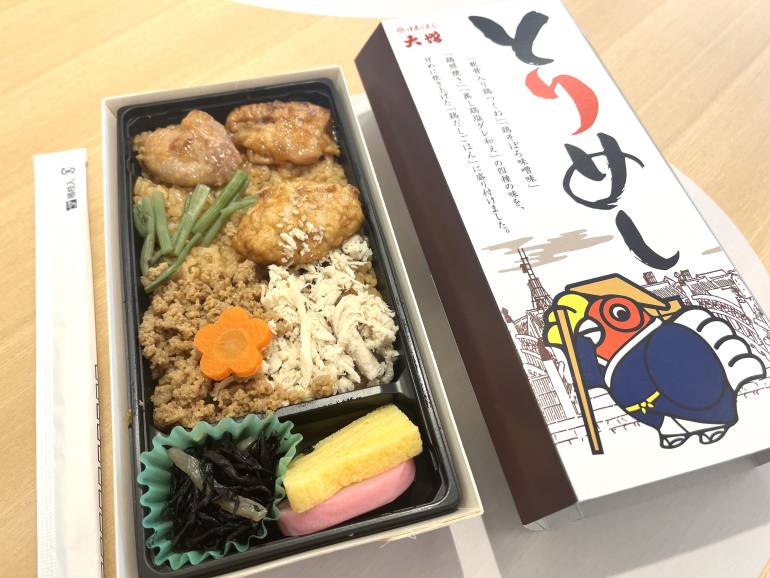
We headed to Hanagataya in Shinagawa Station and walked out with a compact, true ekiben from long-running fishmonger Nihombashi Daimasu, active since 1900. We picked up the torimeshi bentō (¥1,080): seasoned rice, miso-flavoured minced chicken, a chicken meatball, two pieces of grilled chicken, rolled omelette, hijiki, and a flower-cut carrot.
The Edo-merchant chicken on the box is a delight. Verdict: tasty, if on the mild side. For the price, it’s solid value, as most ekiben these days run closer to ¥1,500. Also, low risk of weird burps.
Kōriyama Station (Fukushima)
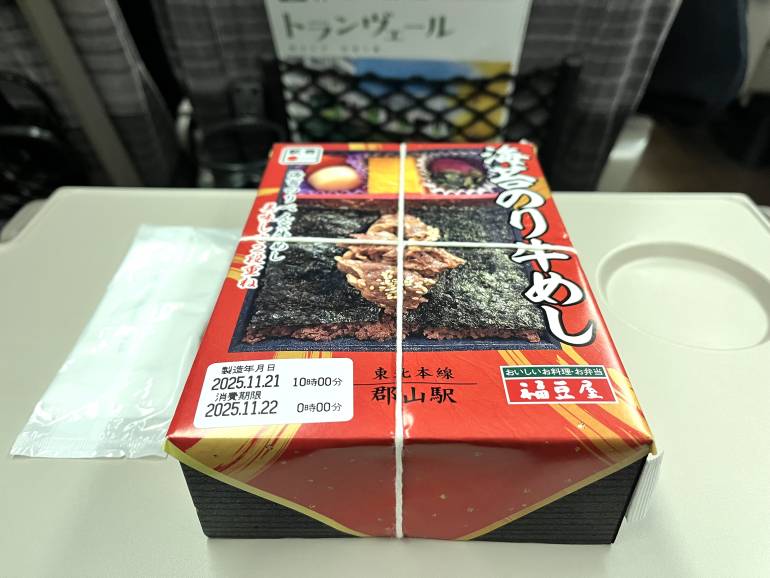
We were running late and dashed into 7/11. Alongside forlorn sandos and mass-produced onigiri (which we also love) sat the Nori Nori ekiben, a Kōriyama special.
True to its name, it’s a happily seaweed-forward box piled with thin-sliced beef simmered in a sweet-savory soy base, then draped over rice with a generous blanket of nori — all locally sourced from Fukushima Prefecture.
The packaging leans nostalgic, with a string that requires untying to access the treasures within. Price-wise it sits slightly below the fancier wagyu boxes at ¥1,400.
Verdict: very filling, though it could use a side or two for variety. The commitment to local ingredients is a highlight, not least because Fukushima farmers still face hurdles in getting their goods onto shelves.
Top ekiben around Japan
If we haven’t made it clear already, ekiben are serious business in Japan. Every year there are competitions to determine the best ekiben, on regional and national levels.
Here’s a few top ekiben to look out for on your travels:
- Tōge no Kamameshi (Gunma – Yokokawa Station): Served in its own ceramic pot, this classic packs chicken, shiitake mushrooms, bamboo shoots, apricot, chestnut, burdock, and seasoned rice. It hasn’t changed much in over 60 years, and the pot makes for excellent home decor.
- Masu no Sushi (Toyama – Toyama Station): Two words: sushi cake. This is a whole wheel of pressed trout sushi wrapped in bamboo leaves. Be warned: it’s far more filling than it looks.
- Ikameshi (Hokkaidō – Mori Station): This Hokkaidō classic is made of tender squid stuffed with seasoned rice and simmered in soy until glossy. While it came into being during wartime rationing when rice was scarce, today, the vibe is luxury.
- Anago Meshi (Hiroshima – Miyajima-guchi Station): Soft, sweet-savory conger eel fillets are laid carefully over soy-glazed rice. It’s the traditional “before the ferry to Miyajima” meal.
Ekiben FAQs

What if I have allergies?
In big stations and popular ekiben stores, such as Ekibenya Matsuri and Odori, there will be an English and Japanese allergen guide on the side of the bentō box that tells you what is inside. Some newer boxes also have a QR code you can scan that lists the main ingredients in multiple languages.
If you want to double-check, make sure to tell the staff your allergy: “Gyunyu (milk) arerugi ga arimasu.” (“I have a milk allergy.”). You can also replace gyunyu with the word nattsu (nuts), niku (meat), sakana (fish), tamago (eggs), or guruten (gluten).
Note that as most if not all bentō are centered on rice, it is rare to find a keto-friendly option.
What about halal ekiben?
Halal ekiben are not common, but you can order bentō online from different providers, including WaO-Bentō Kajiya, and have them delivered.
What do you drink with your ekiben?
Anything you like!
It’s not uncommon to see beer being sold alongside ekiben, and it’s perfectly acceptable to buy and drink alcohol on the train. Don’t be too shocked if you see a businessman chugging a chūhai at 9 a.m onboard.
What is the difference between ekiben, soraben, and bentō?
The short of it: ekiben you eat on a train, soraben (sky lunchboxes) you eat on a plane, and bento you eat anywhere you damn well like. There isn’t a true physical difference. Ekiben and soraben are slightly fancier and tend to come with opaque lids and chopsticks, while bentō come in all shapes and sizes.
If you buy a bentō from 7-Eleven and then eat it on the train, does it become an ekiben?
This is too philosophical a question for us to answer.
But technically, no. Bonafide ekiben bear a square symbol that says “ekiben” in Japanese and English and a red circle as in the Japanese flag, usually in one of the top corners. This signifies that JR recognizes the creator of the ekiben as an authorized organization.
If your boxed lunch doesn’t have that mark of authenticity, we hate to break it to you, but you’re eating just a regular degular bentō. We don’t make the rules.
Find out more interesting things you can eat in Tokyo, or why not try a theme restaurant?
While we do our best to ensure it’s correct, information is subject to change.

