

7Views 0Comments

Unveiling Tehran’s strategy of “managed ambiguity” against Israel – Middle East Monitor
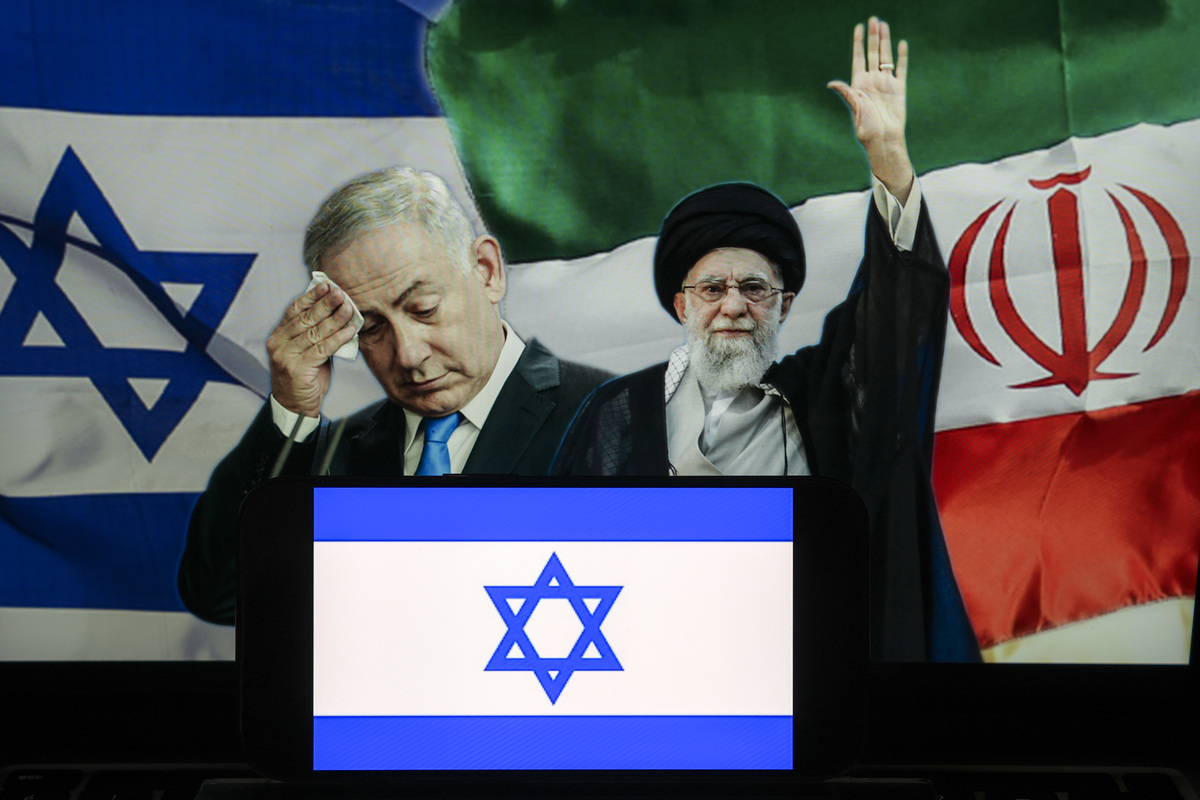
In the post-war strategic landscape of the Middle East, silence constitutes the most deceptive variable. While the balance of power appears to have shifted, security circles in Tel Aviv grapple with a reality far more complex than headlines suggest. Israeli strategists seemingly agree on one unwritten consensus: the “Iran issue” has not ended; it has simply transformed. Yet, in a twist of irony that defines modern asymmetric warfare, an internal phenomenon in Iran – namely the persistence of scattered, low-intensity protests – has unexpectedly become a deterrent against aggressive foreign actions.
Western capitals predominantly view the regime as teetering on the brink. However, a closer reading of recent assessments by the Israeli intelligence community suggests a more cynical reality: the state of “neither complete stability nor immediate collapse” inside Iran effectively places Tehran in a security “gray zone.” By imposing a computational hesitation on Israel, this managed anarchy gifts the Islamic Republic the most vital strategic resource: time.
The dilemma of the “status quo ante”
To understand why internal unrest works in favour of Tehran’s “politics of time,” one must first reread the logic of the threat from Tel Aviv’s perspective. Strategic memos published by the Institute for National Security Studies (INSS) regarding the 2025 outlook explicitly define Israel’s red line as preventing Iran from returning to the status quo ante. INSS analysts emphasise that the current diplomatic deadlock represents the most dangerous scenario for Israel, as Iran could use the shadow of non-agreement and reduced oversight to rebuild its damaged infrastructure.
Classical military logic dictates that the response to such a looming threat should be a preemptive strike or, at the very least, maximum military pressure to prevent the adversary from restoring deterrence. But the internal Iranian variable disrupts these calculations. INSS analytical documents regarding regime stability indicate that although the system’s legitimacy has declined, the hard power structure – specifically the IRGC core and the Basij – maintains its integrity. This assessment marginalises the option of “regime change from the outside” in Israel’s security doctrine, shifting the strategy instead toward attritional weakening. But attritional weakening requires time, and time is precisely what the dynamics of internal protests provide.
READ: US ‘supports the brave people of Iran’: Secretary of state
Protests as a shield… and a sword
It may seem counterintuitive, but senior Israeli analysts believe that the current situation on the streets of Tehran creates a psychological defensive shield against foreign attack. Ron Ben-Yishai, a prominent military analyst writing for Ynet, points out that although discontent exists, these protests still lack unified leadership and the capacity for immediate toppling. Ben-Yishai and his peers note that the Israeli intelligence community deeply fears the “rally ’round the flag” effect. Historical experience from the eight-year Iran-Iraq War shows that a large-scale foreign attack holds high potential to incite nationalist sentiments. As The National Interest warns, a military strike could reverse the dynamics of protests; instead of deepening the rift, it would give the government the excuse to suppress any dissenting voice as a “fifth column” with justifiable violence.
Therefore, decision-makers in Tel Aviv face a strategic dilemma: if they attack, they might unintentionally help the regime resolve its internal crisis through the “securitisation” of the atmosphere. If they do not attack, Iran uses this breathing room to rebuild. The persistence of scattered protests keeps this hesitation alive and makes the political-social cost of any military action unpredictable for Israel.
The hidden offensive: Shifting the burden of passivity
Crucially, however, this strategy conceals a more potent, hidden objective beyond mere survival. By maintaining a controlled level of chaos, Tehran has effectively transferred the burden of “passivity” from itself to Tel Aviv. Israel, previously in a state of absolute alertness and initiative, has descended into strategic confusion. This disorientation does not merely delay an Israeli attack; it potentially opens the window for Tehran to seize the initiative.
The intensifying rhetoric from Iranian officials, who consistently attribute domestic unrest to Mossad’s machinations, serves a dual strategic purpose. Domestically, it delegitimises the protests; but internationally, it constructs a discursive legitimacy for a preemptive or retaliatory strike against Israel. By framing the unrest as an act of external aggression, Tehran lays the groundwork to justify a direct or indirect blow against Israel as a measure of “national defence.” While initiating conventional war has rarely been Iran’s modus operandi, this shift from a defensive crouch to an unpredictable offensive posture – fueled by the very ambiguity Israel hoped to exploit – marks a critical turning point. The confusion in Tel Aviv implies that the initiative has quietly slipped away from the Israelis, leaving them reactive to a game Tehran is now orchestrating.
READ: Israeli minister reveals: our agents are operating in Iran now
Active containment and Western paralysis
INSS policy documents recommend that Israel focus on a hybrid strategy involving restrictive agreements and credible military threats. But implementing this strategy proves difficult in the shadow of Iran’s internal unrest. When a country remains embroiled in internal tension that leads to neither collapse nor stability, foreign actors – including the US and Europe – show less inclination to conduct major military operations. They prefer to “wait and see,” and this state of suspension is exactly what Tehran desires.
According to INSS analyses regarding regional influence, Iran currently adjusts its strategy based on asymmetric reconstruction. With the relative weakening of proxy forces, Tehran focuses on increasing the quantity and precision of its missile arsenal and maintaining the nuclear threshold. Low-intensity protests focus media and intelligence attention on the streets, whilst in the underlying layers, Iranian technicians repair supply lines and develop centrifuges under this political cover. As reports regarding Iran-Russia nuclear cooperation note, Iran exploits this time to solidify strategic partnerships, a task that would prove impossible under conditions of total war.
Conclusion: Who benefits from the fog?
A review of strategic texts produced in Tel Aviv and Washington leads to the conclusion that Iran’s internal protests have become a time-generating variable in the confrontation equation with Israel. Israel seeks to degrade Iran’s capacities but fears the unintended consequences of military action.
Tehran, understanding this paradox, utilises this “gray space” not only to rebuild but to reverse the psychological momentum of the conflict. Thus, scattered and continuous protests have effectively turned war from a certainty into a probable but high-risk scenario. In the world of strategy, every day that war is postponed marks a winning day for the side that needs to rebuild. As long as this fog of ambiguity prevails, Israel remains suspended in confusion, and the clock in Tehran ticks in favour of the establishment.
OPINION: Iran’s greatest threat isn’t Washington. It’s the generation that refuses to bow.
The views expressed in this article belong to the author and do not necessarily reflect the editorial policy of Middle East Monitor.

