

13Views 0Comments

Sumo Tournaments in Tokyo: What To Know Before You Go
What is a sumo tournament really like? Are there rules and risky behaviors? Don’t worry — in this practical guide we’ll give you the lowdown on everything from the tickets to the matches themselves, so you can enter the stadium feeling like you know your ōzeki from your osechi.
As you might already know, there are six big sumo tournaments held throughout the year, with three taking place Tokyo. If your trip doesn’t coincide with one of the six official tournaments, you can still experience sumo through a morning training session, or at one of Tokyo’s many sumo-themed restaurants, where retired wrestlers perform live demonstrations.
Getting tickets for sumo
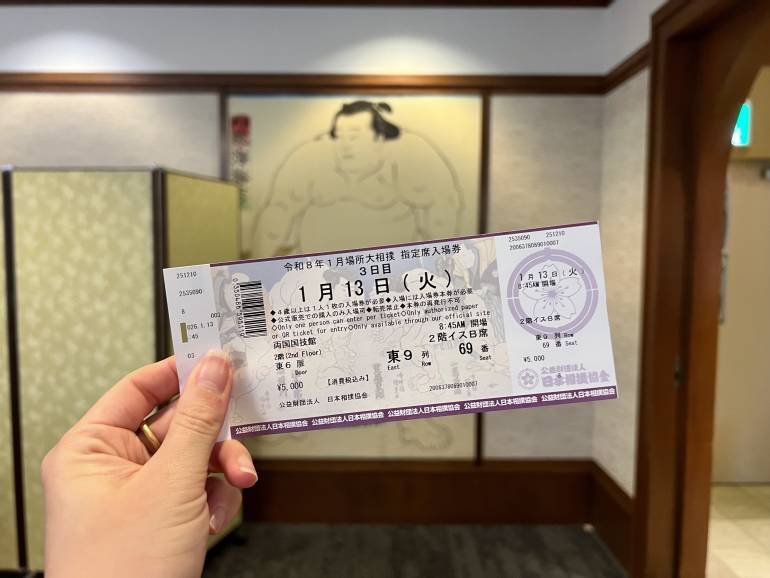
We go into more detail about how to buy tickets in our full guide to seeing sumo in Tokyo, but let’s discuss our personal experience in January 2026 …
Challenge Sumo Wrestlers and Enjoy Lunch
Eat, train, and fight like a real Japanese sumo wrestler during this sumo demonstration and authentic ‘Chanko Nabe’ (hotpot) meal.
With sumo having a resurgence in popularity, we went into it knowing that getting tickets would be like trying to see a major international artist. On the day sumo tickets were released on Ticket Pia, we eagerly logged on and clicked in at 10 a.m. The system promptly crashed, and by the time it reloaded three hours later, all the tickets were gone.
Panicked and slightly frazzled, we thought, what do we do?! Luckily, a number of tour providers offer sumo tournament viewing experiences with seats secured. The providers include Viator and Klook, but this time we locked in seats with JTB Sunrise Tours.
Going this route does cost more, but if it’s your best — or only — shot at seeing sumo in Japan, keep in mind that the price is on par with many other tour experiences here, and the yen is weak, so it’s not outrageous.
We paid ¥19,000, which got us a 2nd Floor B-class Chair seat, as well as a local guide who gave us insights into the world of sumo, and helped us navigate the stadium. But more on that below.
Note: In the past, you used to be able to get cheap tickets outside the stadium, on the day — they would sell one last batch before the matches. Nowadays, tickets sell out like hotcakes, way in advance.
What to expect
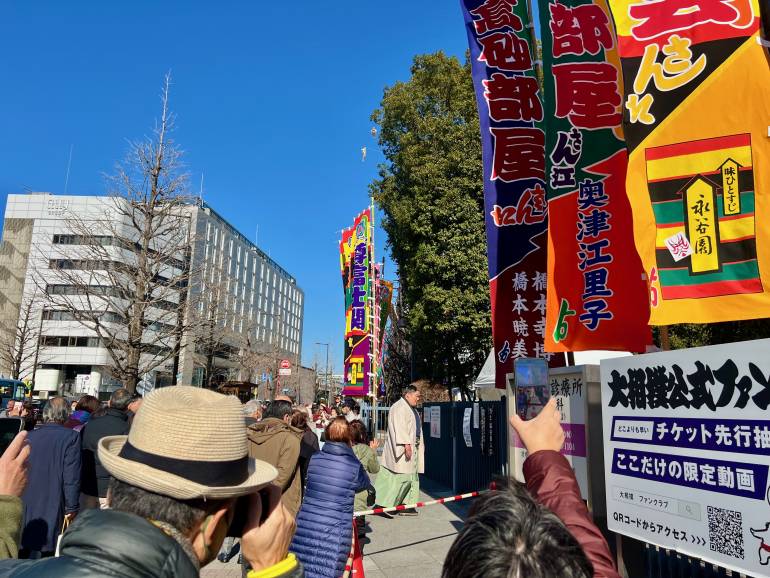
The tour we were part of started at around 1:50 p.m.; however, we recommend arriving in the area beforehand so you can soak in the atmosphere. As soon as you step out of Ryōgoku Station, you can feel the lively energy — with street stalls selling a variety of sumo-related and non-sumo related goods, and an orderly crowd gathered near the side gate of the stadium.
You might be wondering, what are they doing? Well, pro tip — that is the prime spot to see the sumo wrestlers dressed in their yukata, getting out their taxis and heading into the stadium.
It’s the perfect photo opportunity — if you’re willing to wait. That said, you’ll still see sumo wrestlers casually walking around. We generally wouldn’t recommend asking them for a photo, though, as they are on duty. Most spectators simply snap photos of them, rather than with them.
The sumo tournament “tour”
The starting point of our particular group tour was the Ryōgoku View Hotel, though meeting points vary. Once you arrive, you will be asked to show your booking confirmation certificate and will then recieve your sumo tournament ticket, some information guides, and a little souvenir to take home.
Shibuya Official Street Go-Kart – book now, likely to sell out!
Enjoy a 1 Hour karting experience on the city roads of Tokyo, with up to 55% discount this month!
Feel like a celebrity as this course will take you through the famous Shibuya Crossing more than once.
Note: It is very important that you don’t lose your ticket, as you won’t be able to receive another one.
Once the whole group has arrived, the tour guide will go through the schedule for the day and explain the history and basics of sumo. Don’t worry if you can’t absorb all the information at once — everything you need is in the printed guides they provide. Conveniently, they also include list of all the rikishi (top-ranking sumo wrestlers) fighting that day, with their names and profiles in English, so you know who you are watching.
Following all of that, the guide will lead you towards the stadium, roughly around 2:30 p.m., and you will go through the designated group entrance. Note, if you are coming by yourself, you will need to use the main entrance — expect that there might be a line, depending on the time of day.
After entering the stadium, the guide explains all the things you can see inside, aside from the matches themselves. Although you are guided straight to your allocated seats, there is one hour of free time before the dohyō-iri (sumo ring entering ceremony) which starts at 3:40 p.m. You can use this time to explore or grab some food.
Tournament timetable
If your schedule is anything like ours, you’ll watch sumo wrestlers in jūryō (second-highest) and makuuchi (top) divisions fight to secure their titles.
Shibuya Official Street Go-Kart in Shibuya Annex – 55% off!
Enjoy a 1 Hour karting experience on the city roads of Tokyo, with up to 55% discount this month!
Feel like a celebrity as this course will take you through the famous Shibuya Crossing more than once.
Although subject to change, the general flow of the tournament tends to stay the same:
- 2:14 p.m: jūryō entrance
- 2:35 p.m: jūryō matches
- 3:40 p.m: makuuchi wrestlers enter wearing decorative kesho-mawashi (the ceremonial sumo apron)
- 3:50 p.m: yokozuna performs a ceremonial entrance
- 4:05 p.m: makuuchi matches begin and end around 5:30 p.m.
- 6 p.m: yumitori-shiki (bow-twirling ceremony)
Do check the T&Cs for the date you plan on going to a sumo tournament, though, to confirm that you will be getting to see what you want.
Things to do inside the Ryōgoku Kokugikan sumo stadium
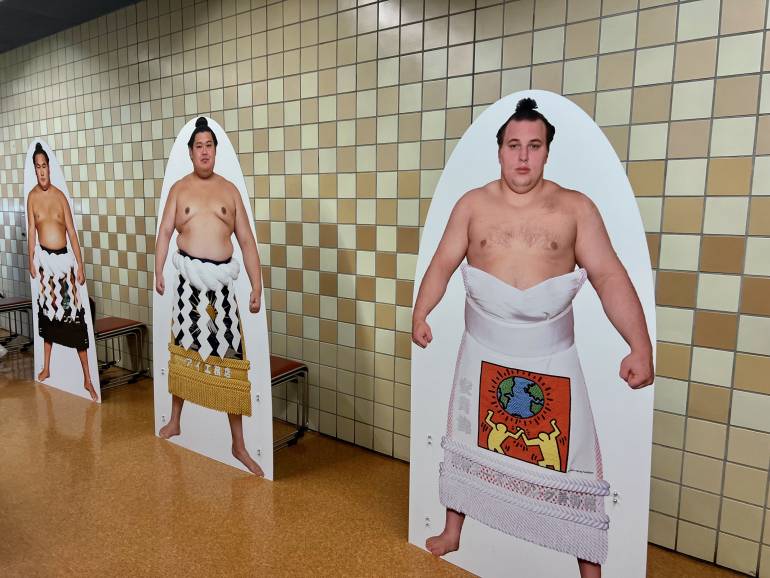
There is actually quite a bit to see inside the stadium — we didn’t really have time to scratch the surface. In the entrance hall, you’ll find many different sumo artworks, an impressive trophy display, and, most interestingly, the Sumo Museum, which is free to enter. Just note that it closes at 4 p.m.
In recent years, sumo fan culture has become comparable to that of idol groups, so around the stadium there are many areas designed for fans. There are big cutouts of top sumo wrestlers for photo opportunities, walls decorated with sumo photos you can pose with, and even a wide variety of gachapon featuring merchandise of popular sumo wrestlers.
There is also suMall, the sumo association’s official souvenir shop. Various food concession stands also double as souvenir shops. If you’ve picked your favorite sumo wrestler, these are the perfect places to look for their merchandise — alongside more general sumo-themed souvenirs.
Other facilities
Talking of more practical facilities, the stadium has four sets of toilets, a cloakroom where you can store bags for an additional fee, and lockers near the East and West entrances.
What to eat and drink
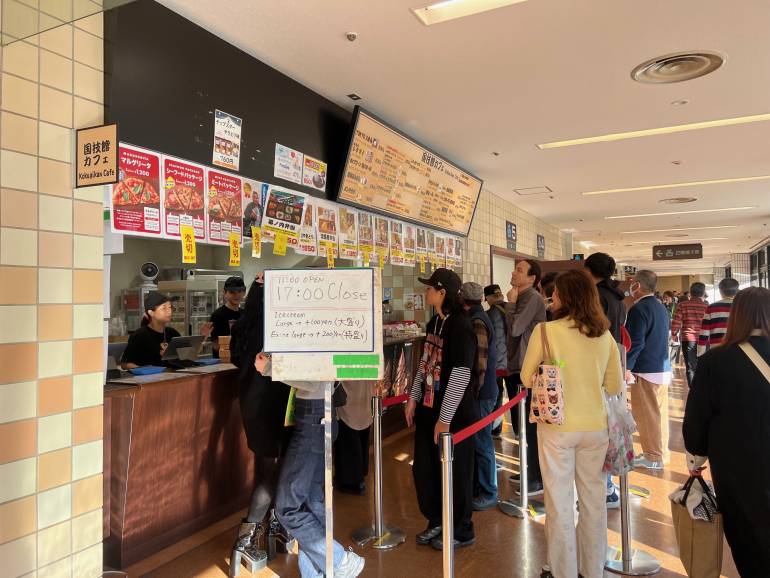
There is no shortage of places to eat inside. There are three different concession stands to choose from: one serving sushi, one offering fried food, and one with more classic stadium-snack foods. At each, you’ll also find beer and other beverages, as well as both savory and sweet treats. If you head down to B1F of the stadium, you can also get your hands on some chanko nabe (classic sumo hotpot).
Given the sheer size of the stadium, you can expect to wait a while for food. On our visit, we grabbed something to eat around 2:30 p.m., before the matches got into full swing, and noticed that many items had already sold out. For example, the yokozuna-themed bento boxes — which I personally wanted to try. Sadness.
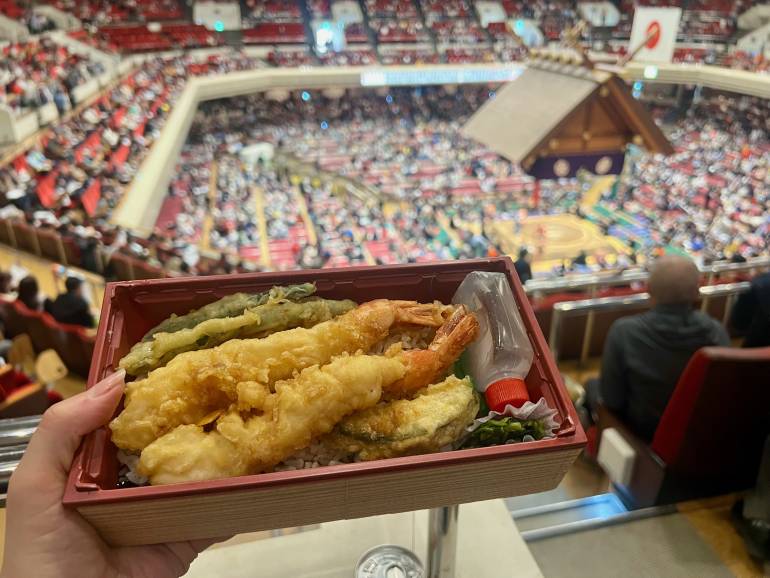
Price-wise, buying food and drink here is a bit expensive. For reference, our tempura bento — which was very filling, I might add — cost ¥1,850. We also bought a souvenir can of nihonshu that cost ¥470, with other cans priced similarly.
It is definitely possible to get a bento or other snack-type foods such as fries and fried chicken for under ¥1,500, though. There’s also the option to pick up convenience-store-style snacks like nuts, dried-meat snacks, and chocolates for under ¥500.
Can I bring food and drink from outside into the stadium?
It is generally not allowed to bring in food and drinks from outside the stadium. You’ll see signs outside the main entrance indicating this.
Social etiquette
Because sumo is a traditional sport with established rituals, it involves certain social-etiquette rules — some general, others more specific. These include:
- Stay seated during matches.
- Stay quiet during tachi-ai (the initial charge between sumo wrestlers).
- Don’t block the view (by standing and walking around during matches).
- No shouting or finger whistling (though cheering is encouraged).
- Don’t change seats.
That’s why we recommend getting your souvenirs and snacks during the free time, and staying put during the matches.
Can I take photographs and videos?
Many people take personal (not professional) photos and videos. However, as mentioned, you need to refrain from standing up to take photos and ensure you are not blocking the view. Don’t use tripods or any other devices which may get in the way. Also, make sure not to stand in the middle of the aisles!
Note: You cannot take photographs in the tamari seats (ringside seats).
If in doubt, ask your guide (if you have one) or check the signs up in the stadium to see if anything has changed.
When should I go to the toilet?
The golden question. If you’ve paid to see the sumo, you don’t want to miss any of the action, so timing your toilet breaks is important. As mentioned, there are two main intervals during the tournament. However, keep in mind that these are the times when everyone rushes to the toilets, so unless you’re super speedy and get to the front, you could be waiting a while.
You’re free to go to the toilet at anytime; just remember not to move while a match is in progress. Perhaps pick a match or two you’re prepared to miss.
Are children allowed to watch?
Yes, children are welcome to come and watch. Children older than 4 years old will need a separate ticket, which costs the same as an adult ticket. That said, sumo tournaments tend to be quite long, with many intervals and short bursts of action. And kids will need to follow the same rules and etiquette as adult spectators.
Some children may get restless or bored, so we would actually recommend going to a sumo restaurant instead. This way, they can learn about sumo in an authentic, but more casual and entertainment-based setting.
Key facilities at Ryōgoku Kokugikan sumo stadium for kids
If you are planning to visit with young children, the stadium has four diaper-changing stations, three stroller parking spots, and a baby care room.
Tips on how to make the most of watching sumo
Now that you know the basic etiquette, let’s go into how to properly enjoy sumo. Despite only having two rules, following a sumo match can be quite confusing if you are new to the rituals and rhythm of it all.
Above the ring is a row of illuminated kanji characters showing who is fighting in each bout. A red line appears beneath the winner’s name once the match is decided. If you want to read the wrestlers’ names in English, the official Sumo Association website displays the match-ups live in English.
Things to do around Ryōgoku Kokugikan

Located right next to the stadium is the Edo-Tokyo Museum which is currenty closed until March, 2026. The museum, well, showcases the history of Edo and Tokyo through various exhibits. It’s actually pretty great.
Also nearby is the architecturally impressive Sumida Hokusai Museum. This museum houses a number of Hokusai’s ukiyo-e paintings, boasting both permanent and temporary exhibitions. Think of that famous wave, and other gems.
If wandering around a museum isn’t your thing, why not take a bath instead? A short walk from the stadium is Edo-Yu Ryōgoku, a modern-style sento which has Hokusai paintings on the walls. Open nearly 24 hours a day, you could go before (and after) the games. Entry costs ¥2,970 for adults and ¥2,270 for junior-high and high-school students.
If you want to sit back and take it all in, we recommend going into the Ryōgoku Tourist Information Center. This tourist center has little restaurants inside, a dohyō (sumo ring) which you can see close up, and a speciality store selling sumo-themed products. There are plenty of seats, free Wi-Fi, toilets and a 7-Eleven.
Pro tip: Before you leave the area, make sure to get a free sumo-themed stamp at the train station. We would recommend doing it before the matches end though, as the area is congested after 6 p.m.
Sumo tournament FAQs
How early should I arrive at Ryōgoku Kokugikan?
The stadium opens at 8:45 a.m., with preliminary bouts beginning at 9:10 a.m., though most visitors and tour groups arrive around 2 p.m. We still recommend getting to the area about two hours early so you can explore nearby sumo spots, soak up the atmosphere, and maybe enjoy some chanko nabe at a local restaurant.
Can you re-enter the stadium?
Yes, you can re-enter — but only once from the South Gate.
Is going on a sumo tournament tour worth it?
Booking tickets through a tour provider, while more expensive, is worthwhile if you’re new to sumo or need those tickets sorted. Providers like JTB handle ticket sourcing and offer valuable insights into the sport.
Watching the matches with a guide means you can ask questions and deepen your understanding, and it’s also a great opportunity to meet other international sumo fans.
While we do our best to ensure everything is correct, information is subject to change.
:max_bytes(150000):strip_icc()/ParamountNetwork.180527-new-summer-shows-yellowstone-af238bf0cf8f4a9eab5bf80be0a99950.jpg?w=670&resize=670,650&ssl=1 "A Complete Guide to ‘Yellowstone’ Filming Locations")
