

23Views 0Comments

Israel’s crisis of conscience – Middle East Monitor
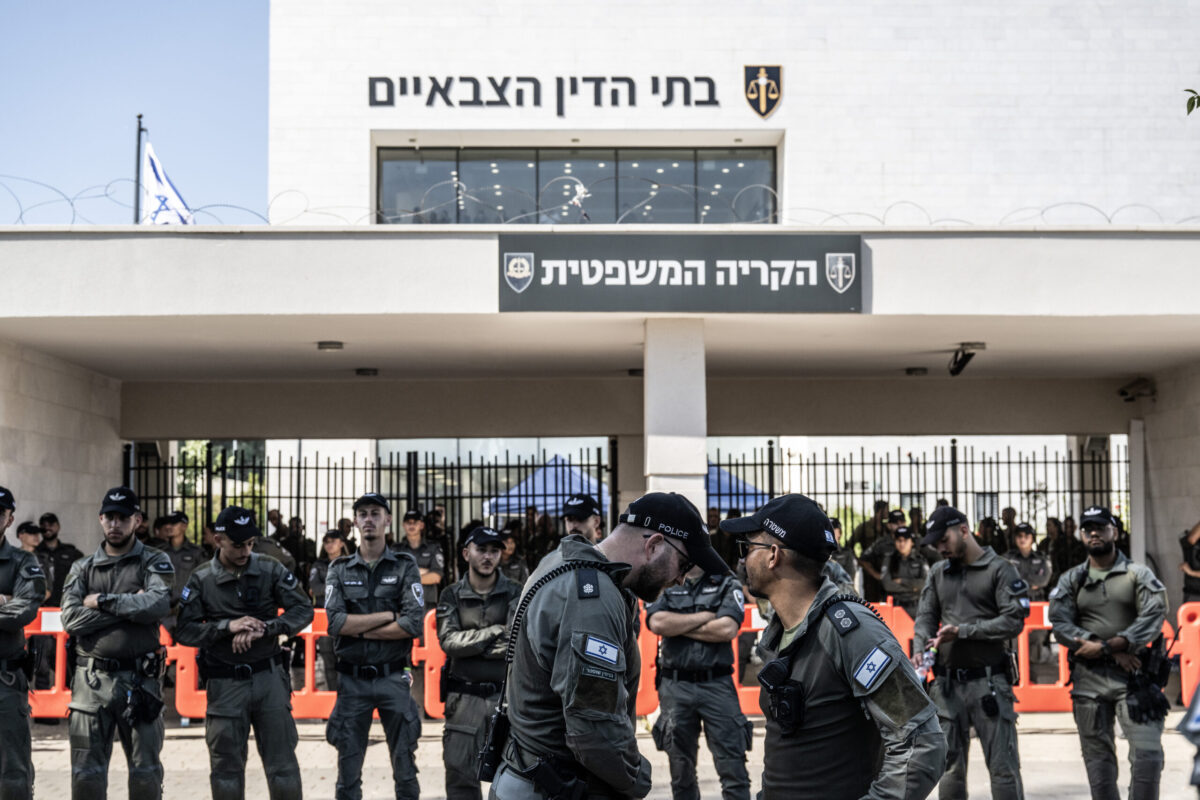
Every system built on control eventually faces a reckoning. There comes a day when the power that once pointed outward—silencing critics, suppressing truth—turns inward, consuming those who still dare to feel. That moment rarely comes with explosions or revolts. It arrives quietly, through acts of conscience that refuse to be buried.
Israel seems to be standing at such a moment. The arrest of Yifat Tomer-Yerushalmi, the country’s chief military prosecutor, for allegedly leaking a video showing the torture of a Palestinian prisoner, is not just a legal scandal. It is a mirror held up to a nation struggling with its own reflection.
Tomer-Yerushalmi was not an outsider or an enemy. She was part of Israel’s most protected core—the legal and military establishment that has long defined itself as the guardian of national survival. Yet within that machinery, she chose something deeply human: empathy. Her decision to expose brutality was not rebellion; it was an act of moral courage, a quiet insistence that law without conscience is just another form of violence. For that act, she was punished.
Her arrest reveals something profound: that a government obsessed with control begins, sooner or later, to fear honesty as much as dissent. Israel, once haunted by external threats, now trembles before its own inner truth. When truth itself becomes the enemy, a nation’s strength doesn’t vanish—it begins to hollow out from within.
For decades, “security” has been the heart of Israel’s identity. In its early years, that word meant survival. But over time, it turned into something sacred and untouchable—a justification for nearly anything done in its name. Questioning power, even from within, became taboo. The tragedy of such sanctity is that it builds walls not just around borders, but around the national conscience. And walls built to protect eventually begin to close in.
Unchecked power forgets the people it was meant to protect. Violence, once excused as defense, becomes habit. Institutions that should safeguard justice begin to guard the story that justifies them. Truth-tellers—the last hope for moral renewal—are silenced, not because they threaten security, but because they threaten illusion.
Tomer-Yerushalmi’s case captures that turning point. A country that calls itself the region’s “only democracy” now finds itself criminalising compassion. Revealing torture has become more dangerous than committing it. That reversal of values marks a crisis no press release or election can disguise.
The tools of repression, once designed to control an occupied people, have turned inward. What was political has become psychological, cultural, instinctive. The “enemy” is no longer out there—it is anyone who dares to remember what humanity feels like. This is self-repression: a nation’s war against its own conscience.
When truth-telling becomes treason, the system is not preserving order—it is strangling its capacity to grow. The message of Tomer-Yerushalmi’s arrest rings through every corridor of bureaucracy: silence is loyalty, honesty is betrayal. Fear replaces empathy; suspicion replaces solidarity. The result is not strength, but paralysis. Institutions lose legitimacy, people lose faith, and society splits—not between left and right, but between those who still care and those who have stopped trying.
The wound here is not only political. It is human. A nation that punishes conscience begins to lose its moral compass. Citizens learn to look away; officials tell themselves they are only following orders; soldiers convince themselves that cruelty is necessity. The line between defender and oppressor fades. What remains is a state of moral sleepwalking—a society that moves, fights, and governs, but no longer feels.
Israel’s leaders still speak of democracy, of vitality amid chaos. But the words ring thin. The pillars of that democracy—its courts, media, and watchdogs—are being quietly eroded. The judiciary shields power instead of the powerless. The press hesitates. Human rights groups, once the country’s conscience, are pushed to the margins.
Tomer-Yerushalmi’s arrest didn’t emerge from nowhere. It is the outcome of years of slow corrosion: the weakening of the Supreme Court, the vilification of dissent, the systematic silencing of those who defend civil rights. Her detention is simply the visible tip of a much deeper moral decay.
Yet there was another path. Israel could have treated the leak as an invitation to reflect rather than a betrayal to punish. It could have said, Yes, we have erred—but we can still choose decency. That could have been a moment of renewal. Instead, it chose fear over courage, silence over reckoning.
And fear is the surest mark of decline. Fear of accountability, of losing control, of admitting that the myth of moral purity can no longer hold. That fear spreads quietly—like rot beneath the surface—until even the strongest structures begin to crumble.
The implications reach beyond Israel’s borders. For decades, the world has seen Israel as a paradox: a modern democracy ruling millions without rights. But now the contradiction can no longer hide behind rhetoric. When even insiders are punished for telling the truth, the moral façade collapses. Allies grow uneasy, supporters disillusioned, and opponents feel vindicated.
In the end, Israel’s greatest danger is not the hostility outside its borders, but the erosion within—the slow decay of empathy, trust, and conscience. Nations can survive war, isolation, and turmoil. But no society can survive the death of its own moral heart. When truth becomes a crime, collapse doesn’t come with a bang. It comes quietly—through silence, through fear, through the dimming of those who once believed.
Tomer-Yerushalmi’s story is not just a scandal—it is a warning. It shows what happens when a nation fears its own reflection more than the world’s judgment. It reminds us that the gravest threat to power is not rebellion, but awakening.
Because every regime that forgets its humanity eventually faces the same fate: it turns its weapons inward, and begins to lose not just control—but its soul.
The views expressed in this article belong to the author and do not necessarily reflect the editorial policy of Middle East Monitor.

