

9Views 0Comments

Visiting PokéPark at Yomiuriland: Gotta Plan It All
View this post on Instagram
What is Yomiuriland?
The greater Tokyo area is home to its fair share of blockbuster theme parks — just look at Tokyo Disneyland. Yomiuriland, on the other hand, is a more accessible and slightly older-school amusement park beloved by locals.
Shibuya Official Street Go-Kart in Shibuya Annex – 55% off!
Enjoy a 1 Hour karting experience on the city roads of Tokyo, with up to 55% discount this month!
Feel like a celebrity as this course will take you through the famous Shibuya Crossing more than once.
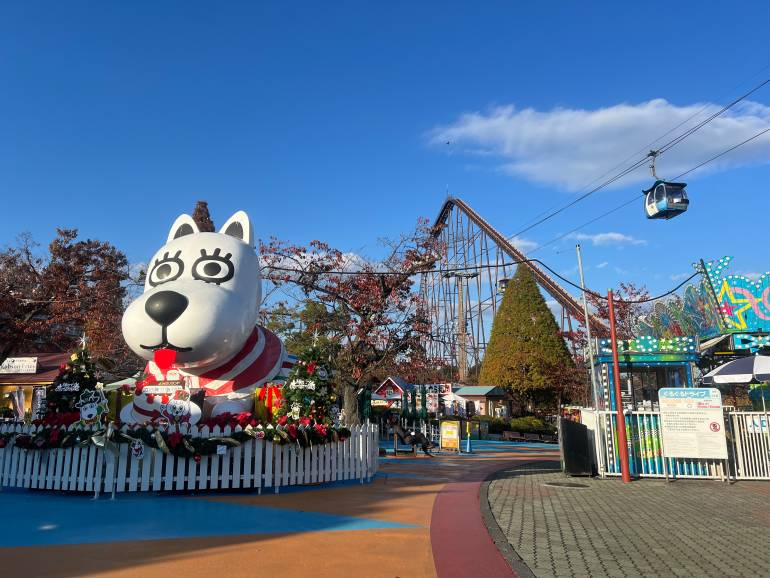
Perched on a hillside in the suburbs of western Tokyo, it’s easy to enjoy a day out here — no need to plan out your queue strategy weeks in advance — and bask in the glow of millions of LEDs during its annual illuminations past sunset.
And if you’d rather skip the rollercoasters, it’s worth noting that this is one of the few amusement parks in Japan — nay, the world — that borders a hot-spring facility, set just beside a forested area with numerous heritage structures and lovely fall foliage.
Tickets for Yomiuriland
Pro tip: We recommend buying general Yomiuriland tickets from Klook. However, you can also buy tickets at the gate (note that PokéPark Kanto tickets are only available via a lottery).
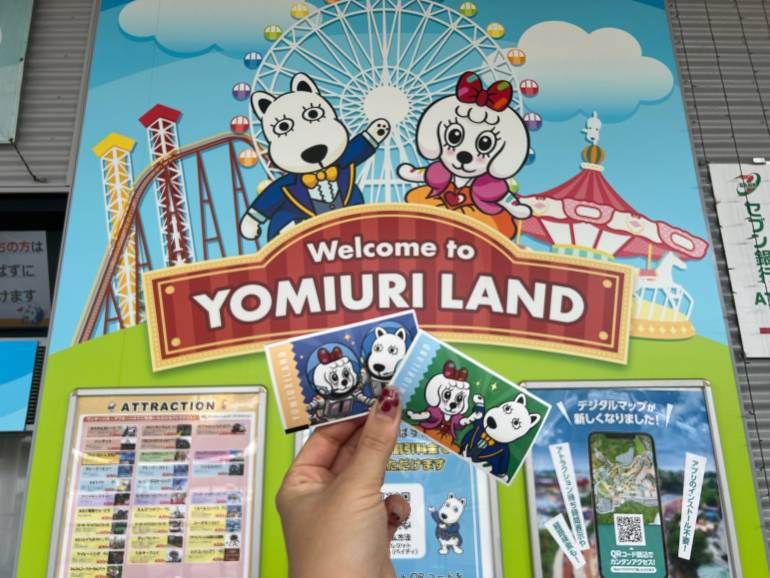
PokéPark Kanto tickets
Initial ticket options for PokéPark Kanto include the Ace Trainer’s Pass from ¥14,000 and the Trainer’s Pass from ¥7,900, both of which come with a dedicated entry time slot. A more affordable Town Pass is scheduled to launch in summer 2026.
Ticket sales run via a monthly lottery, opening from the 1st to the 12th, 3 months before your intended visit, with winners notified toward the end of that month.
Crucially, PokéPark tickets include Yomiuriland admission, so there’s no need to buy a separate park ticket. However, rides seem to be separate — as of the time of writing, we weren’t 100% clear on that.
Basic entry pass
If you just want to stroll around Yomiuriland without strapping yourself into anything that spins, swings, or drops, the admission-only ticket is the simplest option: it’s ¥1,800 for adults, ¥1,500 for teens, and ¥1,000 for kids and seniors.
Recommended: The day pass
Most visitors go straight for the One-Day Pass, though, which bundles entry and unlimited rides into one neat package: ¥5,900 for adults, ¥4,700 for teens, ¥4,100 for kids and seniors, and ¥2,500 for preschoolers. If you’ve gotta ride them all, this is the best option, as paying for individual rides will add up.
Afternoon passes
The After-Pass, which lets you enter from around 3 p.m. and includes unlimited rides, costs ¥3,100 for adults, ¥2,500 for middle and high-school students, ¥2,200 for children, and ¥1,500 for preschoolers.
Get travel and medical insurance with SafetyWing
For short trips, the Essential plan covers emergencies like evacuation, medical care, and delays. For expats or long-term travel, the Complete plan adds check-ups, mental health, maternity, and trip protection.
Special seasonal passes
In summer, the Pool WAI + Amusement Park Pass becomes the most in-demand option and starts from ¥6,400 for adults. It covers both the giant waterpark and the regular rides.
To enjoy the Jewellumination light-up in winter, you can use the aforementioned After-Pass.
Hana Biyori
And if you prefer flowers to ferris wheels, there’s Hana Biyori, the botanical side attraction, also home to arguably Tokyo’s most atmospheric Starbucks, and the aforementioned hot-spring facility and Cultural Asset Forest. Entry to Hana Biyori is separate — ¥800 for adults and ¥500 for kids.
What to see and do at Yomiuriland
Yomiuriland is considerably smaller than Disneyland. This means that almost everything is within a 10-minute walk of each other, and it’s easy to get around.
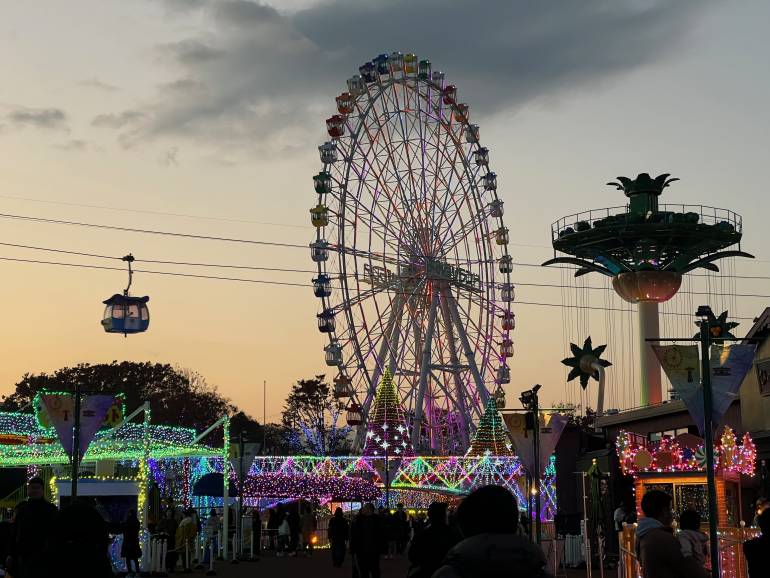
Here’s a rundown of the main attractions to look out for.
Navigate Japan Like a Local [Never Get Lost]
Navigate Japan’s transportation as the locals do! Using Sim Local’s eSIM on AU’s network. Access real-time maps and train schedules instantly — Get 5G Speed internet connection like a local, forget roaming fees, and explore seamlessly. Use code CHEAPO10 and save money! …
PokéPark Kanto
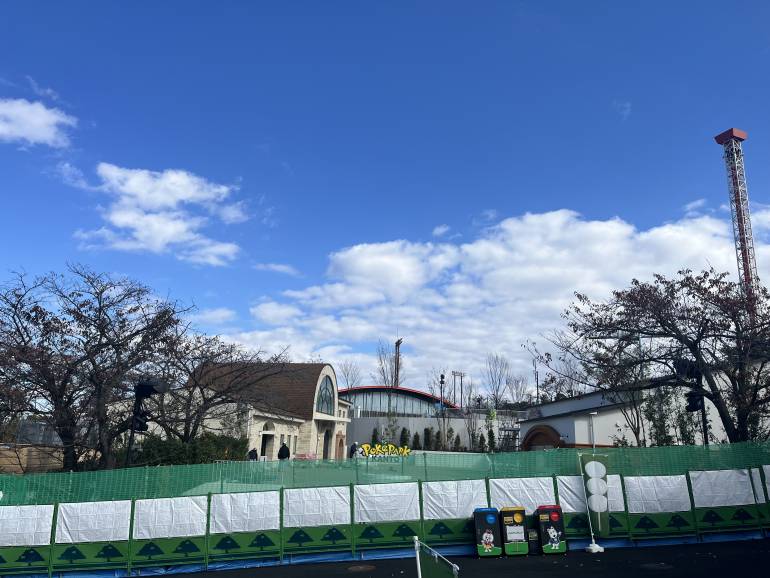
PokéPark Kanto, opening February 5, 2026, is set to become Yomiuriland’s biggest attraction, and the world’s first permanent outdoor Pokémon theme area.
Spread across 2.6 hectares, it’s divided into two zones: Pokémon Forest, a roughly 500-meter nature trail where around 600 Pokémon appear in recreated habitats, and Kayatsuri Town, a mini-city with a Pokémon Center, a Gym, two themed rides, character greetings, interactive parades, and a Trainer’s Market loaded with merch.
Tickets work on an advance online lottery system, with the first round opening in November 2025. Initial ticket types include the Ace Trainer’s Pass (from ¥14,000) and the Trainer’s Pass (from ¥7,900). You’ll get a dedicated time slot.
A simpler Town Pass will launch in summer 2026. Each lottery opens from the 1st to the 12th, three months ahead of your visit window, and winners are notified toward the end of that month.
Importantly, PokéPark tickets include Yomiuriland admission, so you don’t need a separate park ticket.
Yomiuriland rides
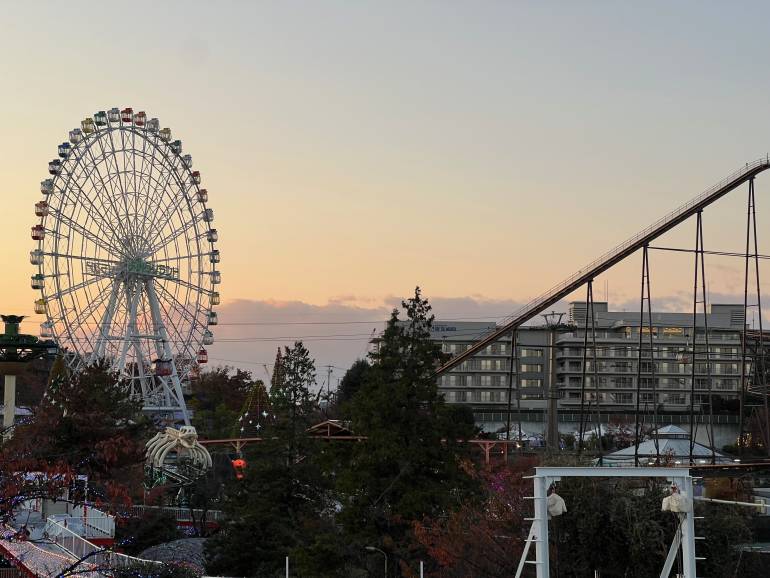
Yomiuriland’s skyline is anchored by Bandit, a long-running rollercoaster that was, in fact, the fastest rollercoaster when it was built back in 1988. Despite having since lost the title, it is still a pretty thrilling ride, with sharp, shriek-inducing curves and steep drops (opt for snacks after, not before). In autumn the track cuts through bright foliage, while in spring, it skims the sakura.
There are gentler options, of course. There’s the Looping Starship, a pendulum-style swing that gradually builds height until you’re hanging upside down in a full 360-degree rotation.
Or if you’ve got coaster-curious kids, the Wan Wan Coaster Wandit is a cheerful dog-themed ride that gets the job done — it should elicit just the right amount of squeals, without the stress.
An evergreen favorite, the giant ferris wheel offers sweeping views of Tokyo, Mount Takao, and (soon) the expanding PokéPark Kanto zone. The Sky-Go-LAND ferris wheel is newer and equally panoramic — it’s also wheelchair-accessible.
The Goodjoba!! Area
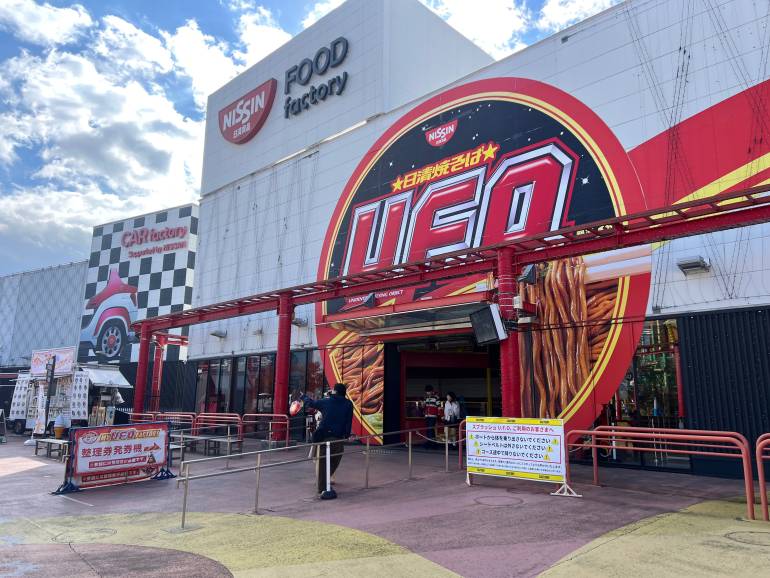
Corporations and amusement parks have always had a soft spot for each other, and Yomiuriland’s Goodjoba!! area carries that tradition into delightfully odd territory. Each zone is tied to a real Japanese company.
Our top pick is the NISSIN Yakisoba U.F.O. food factory. Here, you can decorate your own instant-noodle packaging and pick the ingredients for a personalized cup that’s (literally) got your name on it. There’s no one stopping you from concocting the midnight noodles of your fantasies. Who says kimchi, tomato, and chicken can’t go together?
Costs and wait times
Each ride costs up to ¥1,000. When we visited on a weekday morning, there was no wait. However, during weekends and peak hours, you may need to queue for a short time.
Note: The official website helpfully posts predicted queue times each day.
Hana Biyori
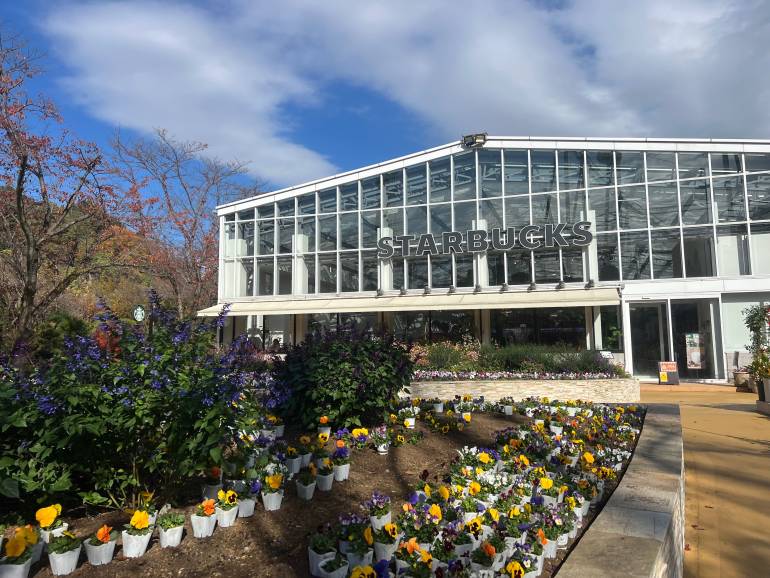
Just a short walk from the ferris wheel is Hana Biyori.
Hana Biyori has its own admission fee (¥800 for adults). It is possible to visit without also having to get a ticket for Yomiuriland.
As of the time of writing, guests with a One-Day Pass can enter Hana Biyori at no additional cost, but note that this is a temporary campaign. You can move freely between Hana Biyori and the rest of Yomiuriland: just show the attendant your ticket when you do so.
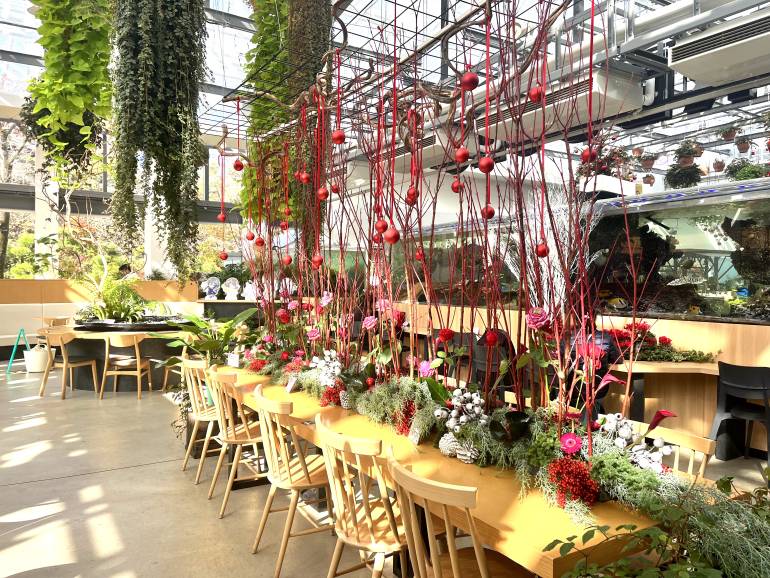
The central landmark of Hana Biyori is its glass-walled Starbucks — you’ll need the aforementioned ticket to acess the space. Here, you’ll be surrounded by seasonal flowers, living plant installations, and even coral and fish swimming around in mini aquariums. To take a breather and get caffeinated, you could do a lot worse.
Kakei no Yu
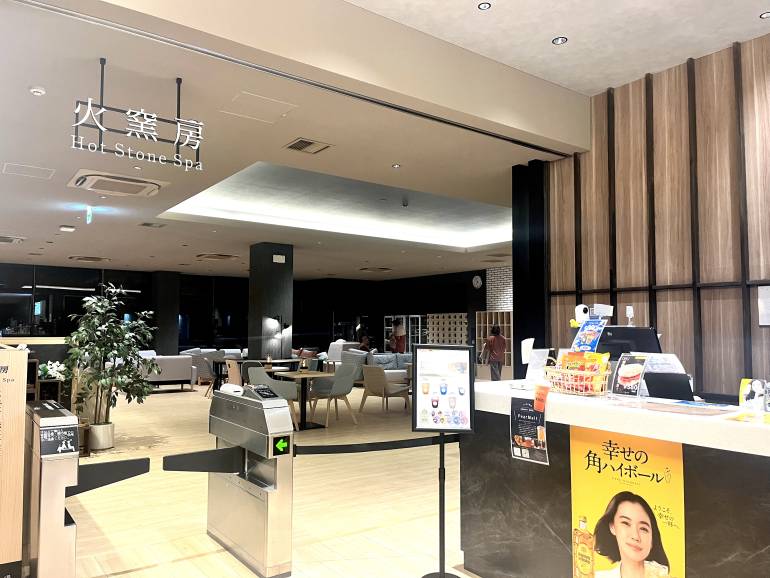
Hana Biyori connects directly to Kakei no Yu, a large hot-spring facility. This separate building houses baths (including hot-stone baths and a sauna), rest areas, and a massive terrace.
There is also a nice restaurant called Bishoku no Kiwami. The restaurant employs a tablet-based, multilingual ordering system and has lots of seating for all kinds of groups, ranging from solo diners to families.
It costs extra to enter Kakei no Yu, with the fee differing by the day and your park admission-ticket type. When we visited, there were special hot-spring tickets priced ¥2,300 and up, which included Hana Biyori admission, bath access, the bathing tax, rental clothing, and a towel set.
The baths at Kakei no Yu are legit: you’re getting natural spring water drawn from 1,750 metres underground. Classified as a mildly alkaline bicarbonate spring, this type of hot spring is favored for its skin-smoothening properties.
In addition to various indoor baths and a sauna, there are two open-air tubs maintained at two different temperatures (40 and 43 degrees Celsius, respectively). Both offer a bird’s eye view of Tokyo. You’ll even be able to spot Skytree twinkling in the distance.
The Sacred Forest
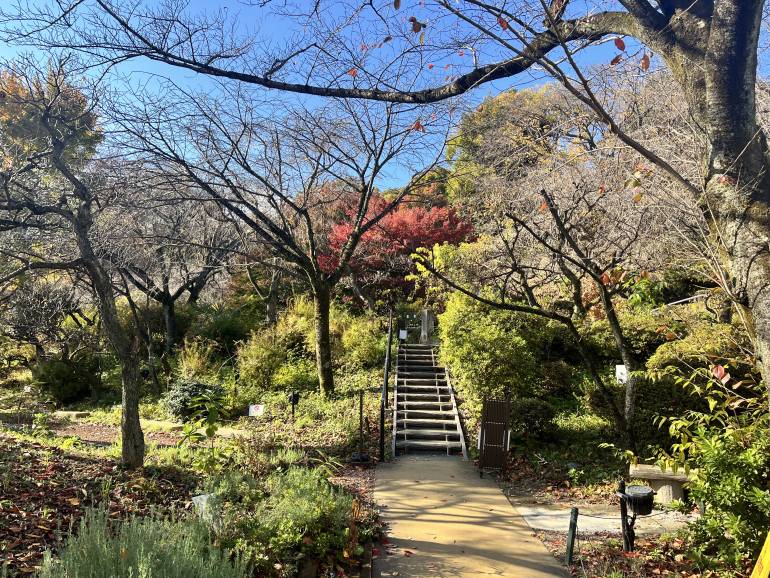
Right beside Hana Biyori’s greenhouse (which houses the botanical Starbucks) and garden paths is its most unexpected corner: the Sacred Forest, dotted with Buddhist structures and cultural assets. This is the site of the white marble pagoda, Shaka Nyorai-den, that you can see on the cable car over. Inside, it enshrines two rare Buddhist relics.
Also within the forest is a statue of Myōken Bosatsu, recognised as a cultural property, along with other religious sculptures with rich history.
It’s a surreal overlap: you’re looking up at the magnificent gold-tipped pagoda while the faint sound of coaster screams drifts over the trees. That’s Tokyo for you: a city of opposites, where calm and chaos are two sides of the same coin.
Seasonal highlights
Summer brings Pool WAI, a full waterpark complete with slides and a wave pool.
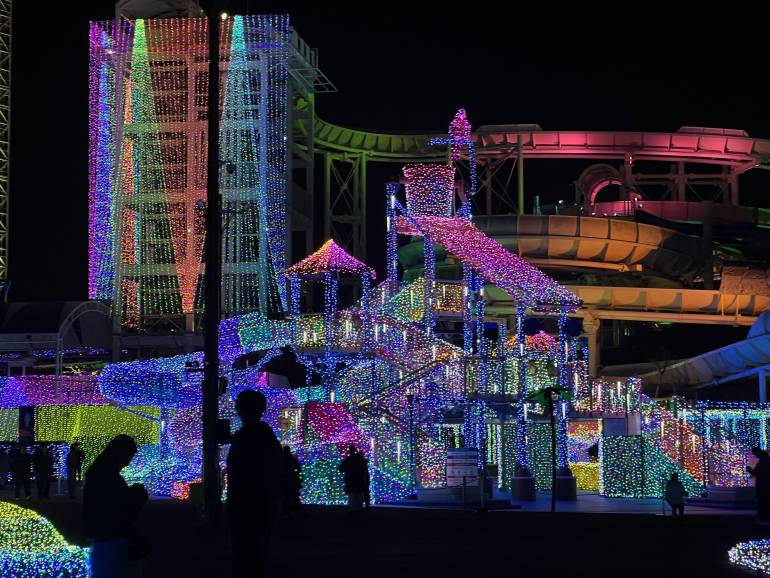
In winter, it’s all about Jewellumination, an LED extravaganza created by lighting designer Motoko Ishii. It’s one of Tokyo’s most impressive (and underrated) seasonal light-ups.
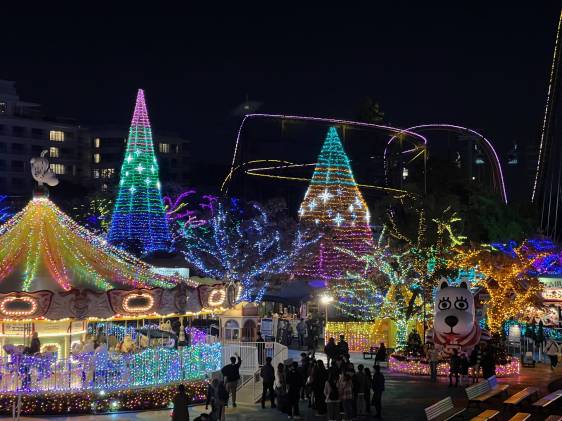
Oct 23–Apr 5, 2026
¥1,600 – ¥5,800
Facilities at Yomiuriland
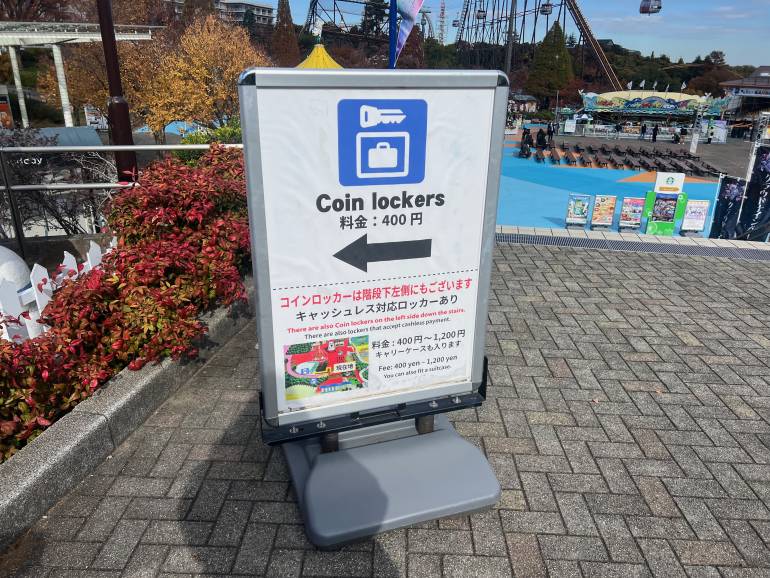
- Coin lockers: Available in multiple locations near the entrances and around Goodjoba!! Sizes range from small to large, with fees from ¥300 to ¥500.
- Stroller and wheelchair rental — Both are available for a fee at the entrance area. Strollers help younger kids survive the hills; wheelchairs make the park more accessible.
- Baby/nursing rooms — There are two baby rooms with diaper-changing and nursing facilities, one each in the Goodjoba!! and Family Area. There is also one in Hana Biyori.
- Multipurpose/accessible restrooms — Wheelchair-accessible toilets are placed throughout the park.
- Designated smoking areas — Smoking is only allowed in marked zones, away from queues and walkways.
- Adults: ¥7,900 × 2 = ¥15,800
- Children (3+): ¥7,900 × 2 = ¥15,800
- Adults: ¥1,800 × 2 = ¥3,600
- Children (6–11): ¥1,000 × 2 = ¥2,000
- Adults: ¥5,900 × 2 = ¥11,800
- Children (6–11): ¥4,100 × 2 = ¥8,200
- Bungee jump
- Sky Shuttle (gondola)
- Giant Sky River (during pool season)
- One-way: ¥300 per person
- Round trip: ¥500 per person
- Trainer’s Pass total: ¥31,600
- Gondola round trip: ¥2,000
- One-Day Pass total: ¥20,000
- Gondola round trip: ¥2,000
- Chōfu is the easiest add-on. Just a few stops away on the Keiō Line, this neighborhood is home to Jindaiji Temple, one of Tokyo’s oldest Buddhist temples, surrounded by restaurants that specialize in soba.
- If you’re already headed west, you might as well keep going: Mount Takao is less than an hour from Chōfu on the same line and makes an excellent half-day hike with cable cars, mountaintop beer, and seasonal foliage.
- On the Odakyu Line side, riders can segue into even bigger adventures. Hakone’s hot springs and lake cruises are a direct shot from Shinjuku.
Where and what to eat
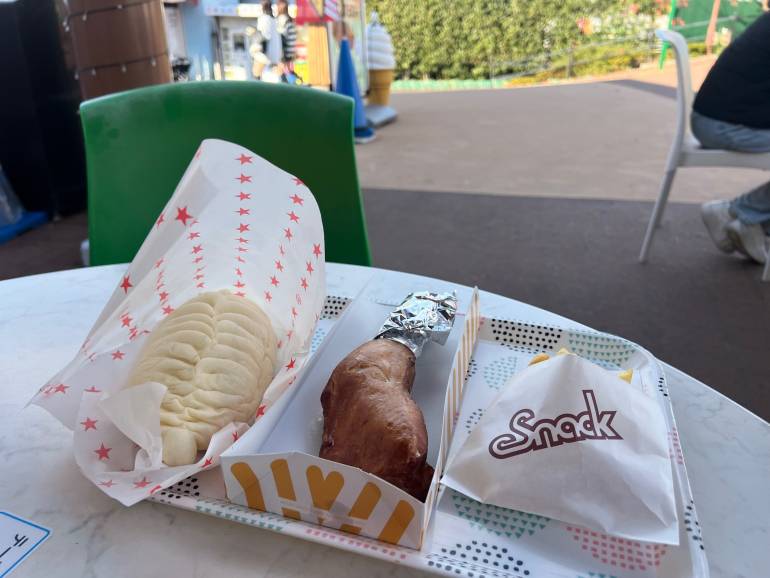
The food at Yomiuriland will keep you fueled between coasters. There’s the classic theme-park fare of snacks and fried foods, but also fuller meals.
You’ll find Starbucks for coffee breaks, Restaurant Goodday for casual meals, and a parade of snack stalls: Robson Fries for Canadian-style fries, MARION Crepes, Churros House, Jerry’s Popcorn, and assorted fast-food counters like Food Station, SAIKAI Ramen Flying Fish, and Tarafuku for udon and soba noodles.
If you’re looking for some protein to keep you going, the smoked chicken leg at Loop (¥700), sold near Looping Starship, is quite tasty, and generously portioned. Meanwhile, the much-talked-about gyoza dog (¥650) is … not quite what we imagined. It’s essentially a long gyoza shaped vaguely like a hot dog, not a sausage-filled gyoza as the name might suggest. So, while it’s still novel, manage your expectations accordingly.
For the broadest selection, though, the restaurant inside Kakei no Yu offers the most choice overall. The menu covers all the bases: set meals, rice bowls, sushi and sashimi, and beyond. The setting is pleasant, and there are plenty of tables.
Budgeting for Yomiuriland

Going to Yomiuriland doesn’t have to be a spendy affair. To help you plan, here’s a real-world breakdown for a family of two adults and two school-aged kids (ages 6–11).
How much will the tickets cost?
You’re choosing among the following options: Trainer’s Pass, Park Admission (entry only), or the One-Day Pass (all-you-can-ride on most attractions).
PokéPark Kanto admission (includes Yomiuriland entry)
The Ace Trainer’s Pass starts at ¥14,000), and the Trainer’s Pass (from ¥7,900) for adults and kids (3+).
Total: ¥31,600
Park admission only
Total: ¥5,600 (but you’ll pay individually for rides inside, which cost ¥1,000 at most)
One-Day Pass
Total: ¥20,000
If you plan to ride multiple rides (more than two or three), the One-Day Pass is better value.
What’s not included?
Even with the One-Day Pass, a few attractions still cost extra. See below for a non-exhaustive list:
Gondola (Sky Shuttle) costs
The scenic cable car that delivers you from Keiō-Yomiuriland Station to the park gate is not included in any pass.
For a family of four:
Round trip total: ¥500 × 4 = ¥2,000
Parking fees and coin lockers
If you’re driving, expect to pay another ¥1,500 on weekends, and ¥2,000+ on weekends/holidays.
For using a large coin locker, add another ¥400 or more.
So, what’s the damage?
With PokéPark Kanto
Estimated total: ¥33,600 (excluding the train ride to the station, food, drinks, souvenirs, or any extra-fee activities)
Without PokéPark Kanto
For a family of four choosing the One-Day Pass and gondola round trip, your baseline looks like this:
Estimated total: ¥22,400 (excluding the train ride to the station, food, drinks, souvenirs, or any extra-fee activities)
Getting to Yomiuriland
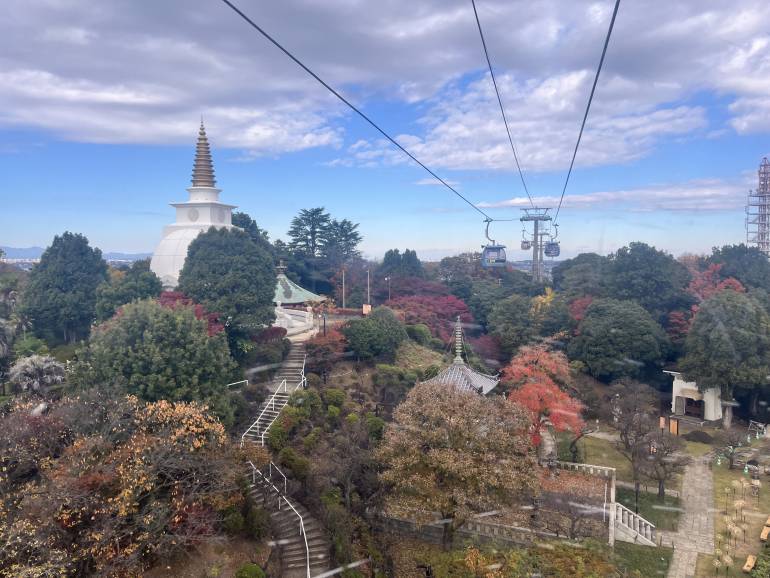
Yomiuriland is located on the western side of Tokyo, in Inagi City.
By train
If you plan on taking the train, there are two main routes from central Tokyo:
Keiō Line
The easiest, no-transfer route: jump on the Keiō New Line (Sub Express) from Shinjuku Station, and ride all the way to Keiō-Yomiuriland Station. This journey costs ¥314 and takes around 35 minutes.
Pro tip: Taking the Special Express to Chōfu Station and then switching to the Sagamihara Line (headed for Hashimoto) is faster, shaving off around 10 minutes.
Either way, it’s quicker than you might expect.
From the station, you have two options: take the #01 bus (around 10 minutes; ¥250) or opt for the gondola cable car (¥300 one way; ¥500 round trip).
The gondola offers the more scenic route by far, with sprawling seasonal views — cherry blossoms in spring and burnished leaves in autumn — and even the majestic top of the pagoda. If the timing is right, you might get to wave hello to some bewildered rollercoaster riders as they whip past beneath you.
Odakyu Line
Meanwhile, from Shinjuku Station, the Odakyu Line gets you to Yomiuriland-mae Station in about 22–25 minutes for ¥293. From there, the Odakyu Bus runs every few minutes, dropping you at the main entrance in under ten minutes (¥250 one way).
Alternatively, buses also run from Shin-Yurigaoka Station. The #7 bus takes around 25 minutes and costs ¥250 one way, with departures at intervals of 20 minutes or so.
By car
The park sits 6–8 km from nearby interchanges on the Chūō and Tōmei expressways, making it roughly a 10–20 minute drive from exits like Inagi IC, Fuchū Smart IC, or Tōmei Kawasaki IC.
There’s on-site parking for around 2,000 cars, with the lot open until 30 minutes after closing time, and fees of ¥1,500 on weekdays and from ¥2,000 on weekends/holidays (cash or cashless payment). On busy days, you may be redirected to a temporary lot.
Free shuttle
A free shuttle bus runs between Keiō-Yomiuriland Station and Hana Biyori every 10 minutes. From the station, the stop is just up the stairs on the left; at Hana Biyori, it’s right by the entrance roundabout.
Times vary by day. Buses begin operating 20 minutes before the park opening time — around 9:40 a.m. on weekdays, and 8:40 a.m. on weekends/holidays, and the service ends at 11:30 p.m. Check the park website for confirmation!
Things to do around Yomiuriland
Yomiuriland is close to some genuinely great day-trip spots — if you’ve got enough stamina points to spare.
Here are three side-quests we recommend:
Staying near Yomiuriland
Our recommendation is to base yourself in either Shinjuku or Shimokitazawa.
In Shinjuku you’ll find everything from budget chains to mid-range hotels. Two hotels to consider are the Hotel Gracery Shinjuku and Shinjuku City Hotel N.U.T.S Tokyo.
For travelers who want nightlife, cafés, and boutique stays, Shimokitazawa is a solid base. Accommodation is mid-range, and the combo of the Odakyu Line + bus puts you at the park in about 35–45 minutes. One of our favorites is Mustard Hotel Shimokitazawa.
Yomiuriland FAQs
Is it worth going to Yomiuriland?
If you’re visiting for PokéPark Kanto, then absolutely. The new Pokémon area is the main draw and your ticket already includes Yomiuriland entry. Even without PokéPark, Yomiuriland is a fun, very unpretentious amusement park: a big coaster, gentler family-oriented rides, seasonal events, and Hana Biyori right next door. It’s especially good for families and anyone who wants a theme-park day without committing to a full mega-resort experience.
How long should I spend at Yomiuriland?
Plan for 4–6 hours if you’re focusing on Yomiuriland’s main rides and grabbing a few snacks. Add another 1–2 hours for Hana Biyori, especially if you want to soak in the onsen.
If you’re visiting PokéPark Kanto, note that you’ll get a ticket with a designated time slot. To be on the safe side, you’ll want to plan around your time slot, and book out an entire day.
While we do our best to ensure it’s correct, information is subject to change. Note that Yomiuriland, PokéPark Kanto and Hana no Biyori are operated by separate companies.

