

30Views 0Comments

Will the Iraqi militias truly disarm? – Middle East Monitor
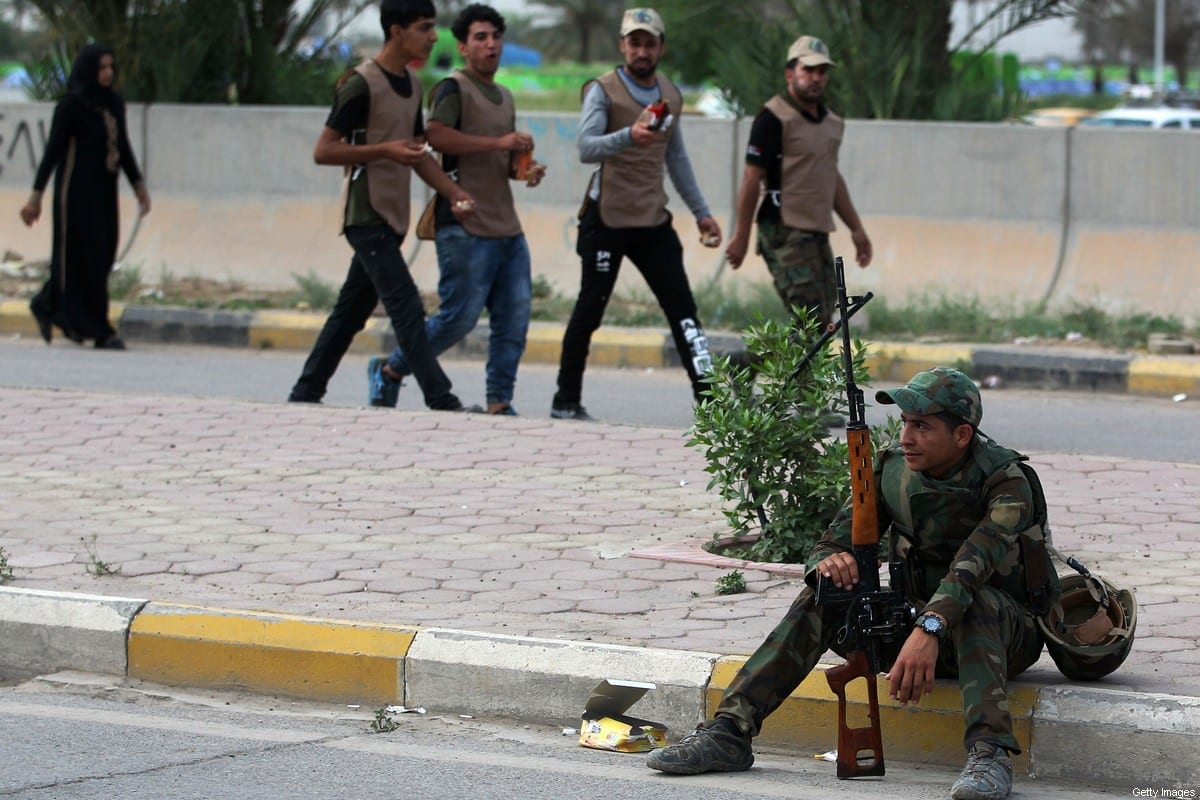
For the first time, several well-known armed groups in Iraq have released statements supporting the idea of “the state’s monopoly on the use of force,” This idea calls for these groups to turn over their weapons to the government, dissolve their groups or merge with the military and security forces, and engage in political involvement. These statements were made in response to the election results, which showed that members of armed groups had won around 100 seats. At the same time, the United States was putting further pressure on Iraq to create a government that would not include militias, to increase economic sanctions to encompass official Iraqi institutions, and to initiate military strikes against militia groups. It also happened at a time when Iran’s clout to influence Iraq’s internal politics was waning.
The purpose of this analysis is to examine the reasons behind the militias’ action, its potential for actual implementation on the ground, and how it relates to the nature of the upcoming Iraqi government, whose job it will be to either put these statements into practice or deal with the possibility of direct confrontations with the militants.
Political shift: Iraqi militias support state’s control of force
In recent days, the leaders of five significant armed groups claimed that they had adopted the idea of “the state’s monopoly on the use of force,” Among these leaders were Qais al-Khazali, who led Asa’ib Ahl al-Haq; Shibl al-Zaidi, who led Kata’ib al-Imam Ali; Ahmed al-Asadi, who led Kata’ib Jund al-Imam; Abu Ala’ al-Walai, who led Kata’ib Sayyid al-Shuhada; and Haider al-Gharawi, who led Ansar Allah al-Awfiya. The majority of leaders in the dominant “Coordination Framework” on the political scene made similar sentiments, albeit in different ways, emphasising the need to assist the state in the upcoming period. Judge Faiq Zaidan, the head of the Supreme Judicial Council, expressed gratitude to the groups for “responding to his advice regarding the necessity of joint cooperation to enforce the rule of law, monopolise weapons in the hands of the state, and transition to political action now that the national need for military action has passed,” Several political forces also made similar declarations of support for these groups.
In contrast to the conventional rhetoric of earlier years that sought to sanctify the militias’ armament, the armed factions’ endorsement of the state’s right to a monopoly on weapons is, in theory, a significant shift. This acknowledgment may also be seen as a subtle departure from the Iranian axis, which promotes the creation of armed organisations outside of regional state frameworks. As a result, proposals for the surrender of weapons were flatly rejected by other armed groups, including the two most dangerous and heavily equipped, Kataib Hezbollah, commanded by Ahmed Mohsen Faraj al-Hamidawi, and Harakat al-Nujaba, led by Akram al-Kaabi. However, the media and political organisations associated with these two groups focused on disparaging other groups, using the US presence in Iraq as a justification for their ongoing actions. It further stated that any discussion of a disarmament accord with the government can only occur following the full evacuation of Turkish and NATO occupation forces from Iraqi territory.
A potential split or superficial division
Two different hypotheses are raised by this obvious difference in the armed factions’ positions: the first is that it is a true and fundamental split, raising the possibility that it will turn into a direct conflict between factions backed by the state and the United States and other factions backed by Iran. According to the second hypothesis, it is a planned and superficial division intended to distribute duties and buy time until the 2026 midterm elections and the 2028 presidential election cause changes in the American political scene.
Both of the above changes are supported by the current political landscape. On the one hand, constitutional and electoral law provisions that forbid the political wings of armed militias from participating in elections have led to legal and public opposition to the acquisition of numerous parliamentary seats by political forces representing armed factions. However, communications from the United States to the Iraqi government and the forces under the “Coordination Framework” have emphasised Washington’s urgency in finding a solution to the militia challenge through a variety of channels, even going so far as to threaten to permit Israel to do so militarily.
The militias’ objective for complete integration into the state and the surrender of their weapons in order to maintain their gains is supported by their electoral triumph, which came after the construction of extensive economic infrastructure, as well as their concerns about a possible US-Israeli threat. These same factors, however, also force them to move at this point, particularly since they are fully aware of how crucial their weapons are to securing their political and economic gains and that giving them up would expose them to legal prosecution, economic penalties, and a reduction in the popular base that allowed them to win parliamentary seats.
US military presence in Iraq: The path to withdrawal and disarmament
The armed groups who just declared their intention to turn in their weapons had started negotiations with the US months ago through middlemen, according to leaks from knowledgeable Iraqi political sources. Guarantees pertaining to the political transition were the main topic of these discussions. These discussions eventually represent ongoing communication between the two parties in a variety of forms, levels, and tactics over the previous few years, even though the extent, scope, and results are unknown.
The focus of American pressure has shifted as a result of the regional shifts that followed the Israeli wars in Gaza, Lebanon, and Iran, as well as the recent events in Syria and their effects on the Middle East’s geopolitical balance. Rather than being restricted to militias endangering American personnel or interests in Iraq, this threat now encompasses the Iraqi government and the political parties involved, as they are occasionally perceived as allies or even complicit in defending those groups. The recent extension of economic sanctions to official state banking and oil entities has been justified by this turn of events.
However, based only on the previously listed elements, it is challenging to explain the American strategic setting in the Middle East, of which Iraq is a crucial axis, requiring a return to an earlier background. Tensions between US forces and Iranian-backed Iraqi militias increased during US President Donald Trump’s first term (2017–2020). This culminated in Washington’s assassination of Iranian Quds Force commander Qassem Soleimani and Iraqi Popular Mobilization Forces deputy commander Abu Mahdi al-Muhandis in the known airport operation on 3 January 2020. Iran then launched a missile attack on the US Ain al-Asad airbase in western Iraq on 8 January. While President Trump claimed at the time that he had received a call from Iran asking for his consent before to the strike—a claim that Iran disputed through an advisor to the Supreme Leader—Washington simply announced the attack without taking any further action.
Iran and the United States both faced the possibility of escalation at that crucial point, and they investigated the unspoken mechanisms for field understandings that had been frequently used during the twelve-day conflict (13–24 June 2025) between Iran and Israel and the United States. This was well illustrated by the Iranian bombardment of the Al Udeid Air Base in Qatar, where they also found ways to manage the threat posed by Iraqi militias, whether they were under Iranian or American control.
The United States started bringing up the necessity to control its military presence in Iraq after Iran bombed Ain al-Asad Air Base in 2020. This change might have been brought about by a suggestion made by French President Emmanuel Macron while he was in Iraq in September of that year. In order to ensure Iraqi sovereignty, the idea suggested setting deadlines for both the disarmament of militias and the US withdrawal from the country. At the time, Macron stressed that “the greatest challenge facing Iraq is foreign interference, and Iraqi officials must build their country’s sovereignty.”
The United States accelerated its commitment to start rounds of “strategic dialogue” with the new Iraqi government led by Mustafa al-Kadhimi due to American concerns about the situation in Iraq and possibly worries about growing French influence there. In order to assess Iraq’s security requirements and establish a withdrawal schedule, these rounds sought to establish technical military committees. Iraq’s training and capacity-building requirements were estimated by a joint high-level technical committee of the US Department of Defense (the Pentagon) and the Iraqi army to take five years, to be implemented in stages, until 2026. According to a number of sources, the US brought up the topic of the future of militias in Iraq during these dialogue rounds, which took place on a regular basis and coincided with the withdrawal of “combat troops,” connecting the successful execution of the withdrawal plan to the elimination of the role of Iraqi armed factions and the consolidation of weapons under state control.
In September 2024, Washington and Baghdad announced an agreement for a two-phase US withdrawal, reaffirming the previously agreed-upon timeframe. The US and Iraqi parties continued to communicate throughout 2021 and 2022. The withdrawals from Ain al-Asad Air Base in Anbar province in November 2025 and Harir Air Base in Erbil province in November 2026 included the first and second phases, respectively. The US still has a minor combat force at Ain al-Asad even though it has removed most of its troops and training operations. However, it appears that a departure from Harir Air Base is unlikely to happen before the deadline.
Backtracking on the implementation of the aforementioned agreement without an official and fully stated Iraqi appeal would be an embarrassment to US policy generally and would put pressure on the status of US forces inside Iraq, even though recent events in the Middle East and their security implications may have forced adjustments to the US priorities regarding withdrawal.
Understanding the historical background is crucial to placing the current US pressure in its appropriate context. This pressure is a reaction to the initial understandings surrounding the US withdrawal, which have always been connected, if subtly and indirectly, to the need to dissolve militias and resolve their status in order to allow Iraq to ensure its sovereignty and total control over weapons outside of the state. Recalling the terms of the 2008 Strategic Framework Agreement, which continues to be the only legal framework controlling the two parties’ interaction, is crucial in this context. This agreement addresses the US obligation to protect Iraq’s security and territorial integrity as well as to uphold democratic institutions, both of which are obviously irreconcilable with the state apparatus’s ongoing use of armed militias.
Two different hypotheses on the US withdrawal from Iraq
Two hypotheses can be put up in this regard: First, that there is a sincere desire on the part of the United States to withdraw from Iraq in accordance with the timeframes that have been set, and that the increased pressure on the government, political forces, and armed groups is intended to create an atmosphere in Iraq that is conducive to withdrawal. The second hypothesis is predicated on the fact that the overall American withdrawal strategy has been altered, as well as the belief that no official Iraqi party can fully satisfy the demands for the disbandment of the militias and the resolution of the Popular Mobilization Forces (PMF) at stake. As a result, a revised withdrawal schedule that is directly connected to the progress of militia disbandment is required.
There seem to be logical reasons in favor of both hypotheses. The second hypothesis appears to have widespread support, as evidenced by the fact that half of the armed factions agreed to the disarmament demands while the other half rejected them. This suggests a mutual acceptance of reviving earlier agreements and creating guidelines connecting the new timetables to the mechanisms for dismantling the militias that the expected Iraqi government will offer in the upcoming months. In this regard, on Wednesday, 24 December 2025, Hadi al-Amiri, the leader of the Badr Organisation, reaffirmed that the choice to disarm must be made entirely by Iraqis, refusing any outside intervention. He underlined that before the international coalition can restrict weaponry to the state, its role in Iraq must be terminated.
Iranian influence in Iraq Post-Twelve-Day War
Iranian influence decreased as a result of the Twelve-Day War on a number of fronts, chief among them being Iraq, where Iranian political influence in the establishment of the new government was less than in the past. However, considering the organisational, ideological, and economic connections that solidify the Iranian presence at the core of the numerous armed factions, it appears implausible to assume that Iran’s influence over the militias themselves has diminished.
From the standpoint of Iranian interests, the current split between the factions over the monopoly of armaments seems to be related to two contexts: According to the first, Iran’s control over its affiliated militias is already eroding, enabling some of them to rebel and make their own decisions. However, this perspective is not supported by recent developments, including as Iran’s encouragement of militias to take part in elections and the rhetorical alignment of faction leaders with Iranian rhetoric both during and after the war. The second context, Asa’ib Ahl al-Haq with 27 seats, Kata’ib Sayyid al-Shuhada with 12 seats, Kata’ib al-Imam Ali with 12 seats, Ansar Allah al-Awfiya with 5 seats, and the Badr Organization with 21 seats are just a few examples of the armed factions that Iran has accepted reorganising their roles within the Popular Mobilization Forces (PMF). While the strongest groups (such Kata’ib Hezbollah and Harakat al-Nujaba) continue to function as a military arm for potential future manoeuvering with the Americans, this acceptance means incorporating these factions into political life as an alternative to the current Shiite government.
The second scenario posits a strategic Iranian change in controlling the instruments of influence in Iraq and the region, with the various factions keeping their current status and modifying their military roles, whereas the first scenario implies an eventual confrontation between the factions.
Iraq’s path to government formation: A complex political landscape
The primary movement is toward the formation of a government with certain characteristics, notwithstanding the obvious disparities in the stances of the “Coordination Framework” forces regarding the procedures and standards for establishing the new government and its intended objectives. In order to enable a safe transition for the armed factions, this government intends to reach a settlement regarding the status and future of the Popular Mobilization Forces (PMF), establish timelines and procedures for their gradual disarmament, and start a conversation about these factions’ future with the American side.
It is unlikely that the factions will uphold their disarmament pledges and encourage communication with Washington through a government headed by a political party that can subsequently take advantage of the “weapons control” agreements and the concessions required to achieve them for partisan, political, or private gain. It seems improbable that any individual with substantial party or legislative power, including all former prime ministers, will be able to create the new government based on this essential requirement. Rather, the odds are in favor of individuals who are not affiliated with any party or parliamentary and who have no plans to gain such power in the future.
There is a belief that ongoing tensions with Washington and the extension of US sanctions on civilian and governmental institutions will not only make it impossible for Iraq to deal with the current economic challenges, but will also put the entire political system in jeopardy due to the anticipated escalation of popular unrest. This is especially true given the state’s incapacity to meet its financial obligations, particularly securing the salaries of employees and retirees, which make up the majority of the annual budget.
Conclusions
A number of Iraqi armed factions have recently made statements that are more serious than a simple political ploy to guarantee their involvement in the government or to prevent attacks by the United States and Israel. These statements promise to adhere to the standard of restricting weapons to the state and the conditions for turning over their various weapons to official authorities. All of these variables depend on a number of factors, including the type of weapons to be delivered (all types or just heavy and medium weapons), the timing of the delivery (immediate or scheduled), the recipient entity (the army and police or the Popular Mobilization Forces), the presence of these factions within the state (are they part of the government and the political establishment or are they restricted to the Popular Mobilization Forces), and the future of the Popular Mobilization Forces themselves (will they be dissolved and abolished, integrated into the army, or restructured? After discussions with the factions, Washington, and Tehran, as well as internal political discussions, the incoming Iraqi government will be responsible for addressing these criteria and turning them into operational mechanisms.
Given the serious difficulties Iraq faces, certain factions’ recognition of the “state” notion is a step in a positive direction, albeit a small one and possibly reversible. These difficulties include the militias’ refusal to disarm and the degree to which the newly elected government will be able to either confront or incorporate them into planned agreements. Iran’s stance also affects the situation; it may opt to escalate and further destabilize Iraq, or it may choose de-escalation to maintain the current peace with Washington and Israel. This also covers the strategic stance of the United States with regard to following the announced withdrawal schedule or possibly renegotiating it.
The views expressed in this article belong to the author and do not necessarily reflect the editorial policy of Middle East Monitor.

